


By A Former Privacy Extremist
I owe the local government an apology. For years, I clung to outdated concepts like "individual privacy," "due process," and the "Fourth Amendment" as if they were more important than catching a teenager who didn't come to a complete stop at a stop sign. I used to think Flock safety cameras, that lovely AI Camera system that track movement across the city, were a "massive violation of civil liberties."
I see the light now. If catching even one petty thief requires tracking the movements of tens of thousands of innocent people 24/7/365, then that is a bargain I am willing to make with my freedom.
Privacy is really just a hiding spot for people who haven't yet realized how much they love being managed. Truly, if you have nothing to hide, you shouldn't mind the government having a digital breadcrumb trail of your entire life. In fact, why are we stopping at cars? Cars don’t commit crimes; people commit crimes.
It’s time to double down. To ensure 100% safety, we must embrace 100% visibility. Below is my modest proposal for the next phase of our local "Total Safety Initiative."
The "Total Safety" Escalation Roadmap
To move beyond the limitations of mere roadside cameras, I recommend the following civic enhancements:
1. County Thought Compliance Program
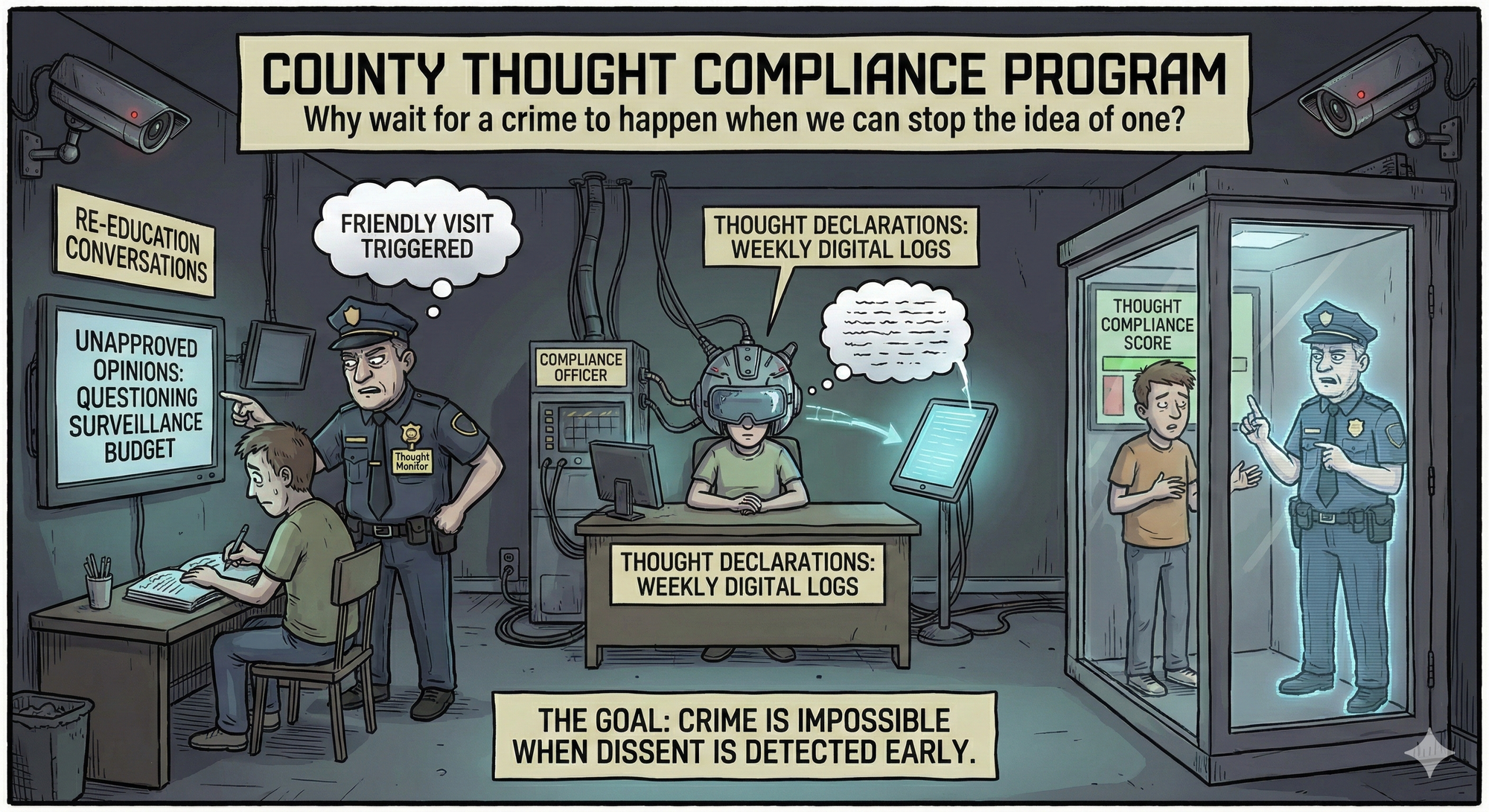
Why wait for a crime to happen when we can stop the idea of one?
- Thought Declarations: Residents submit weekly digital logs of their internal monologues.
- Re-education Conversations: Any "unapproved opinions" (e.g., questioning the surveillance budget) trigger a friendly visit from a compliance officer.
- The Goal: "Crime is impossible when dissent is detected early."
2. Mandatory In-Home Cameras (For Your Safety)
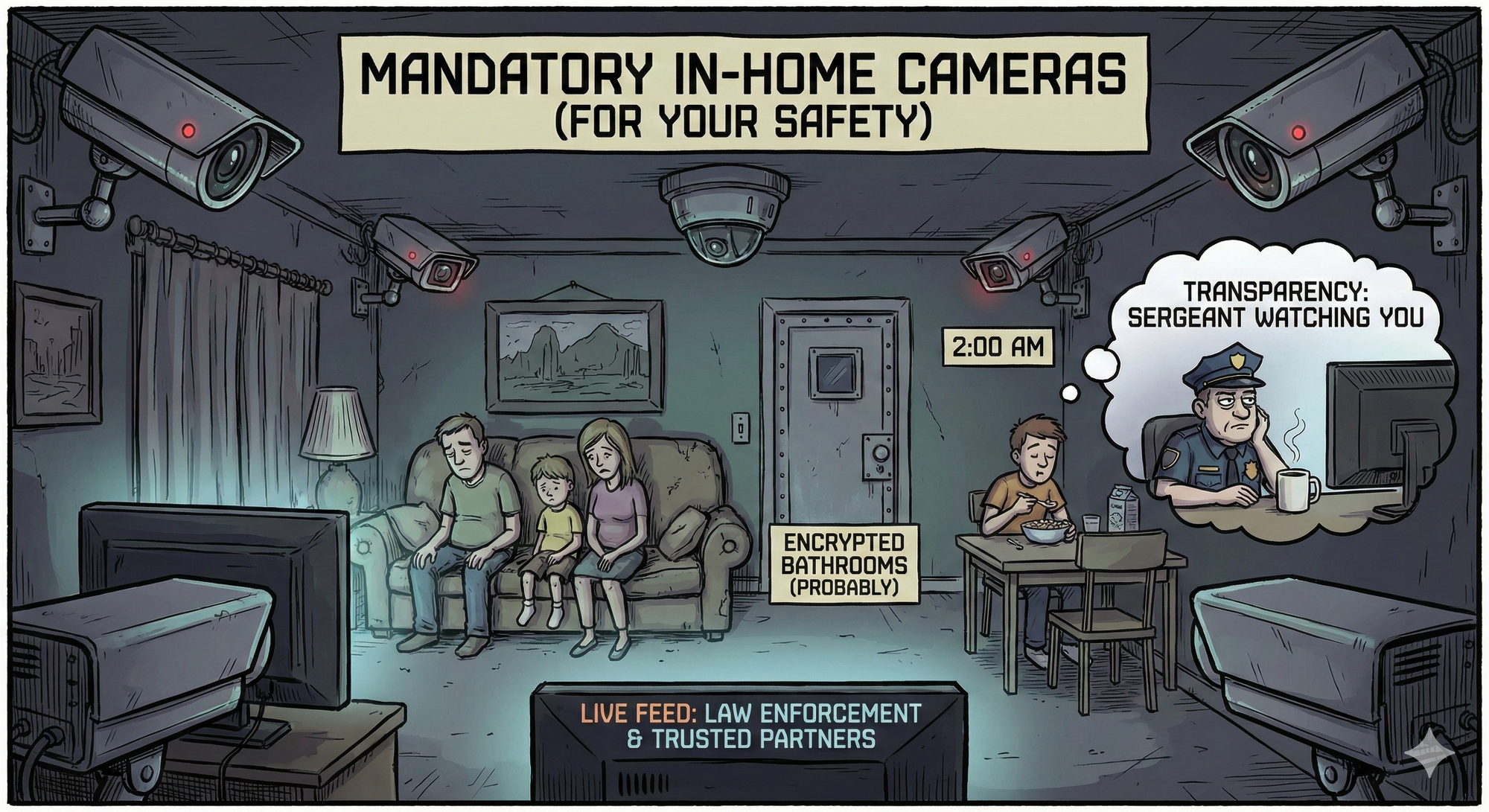
Public roads are only half the story. Most "suspicious behavior" happens behind closed doors.
- One Camera Per Room: A live feed accessible to law enforcement and "trusted third-party corporate partners."
- Encrypted Bathrooms: Don't worry, the bathroom footage is probably encrypted.
- Transparency: Because nothing builds trust like a sergeant watching you eat cereal at 2:00 AM.
3. Movement Permission System
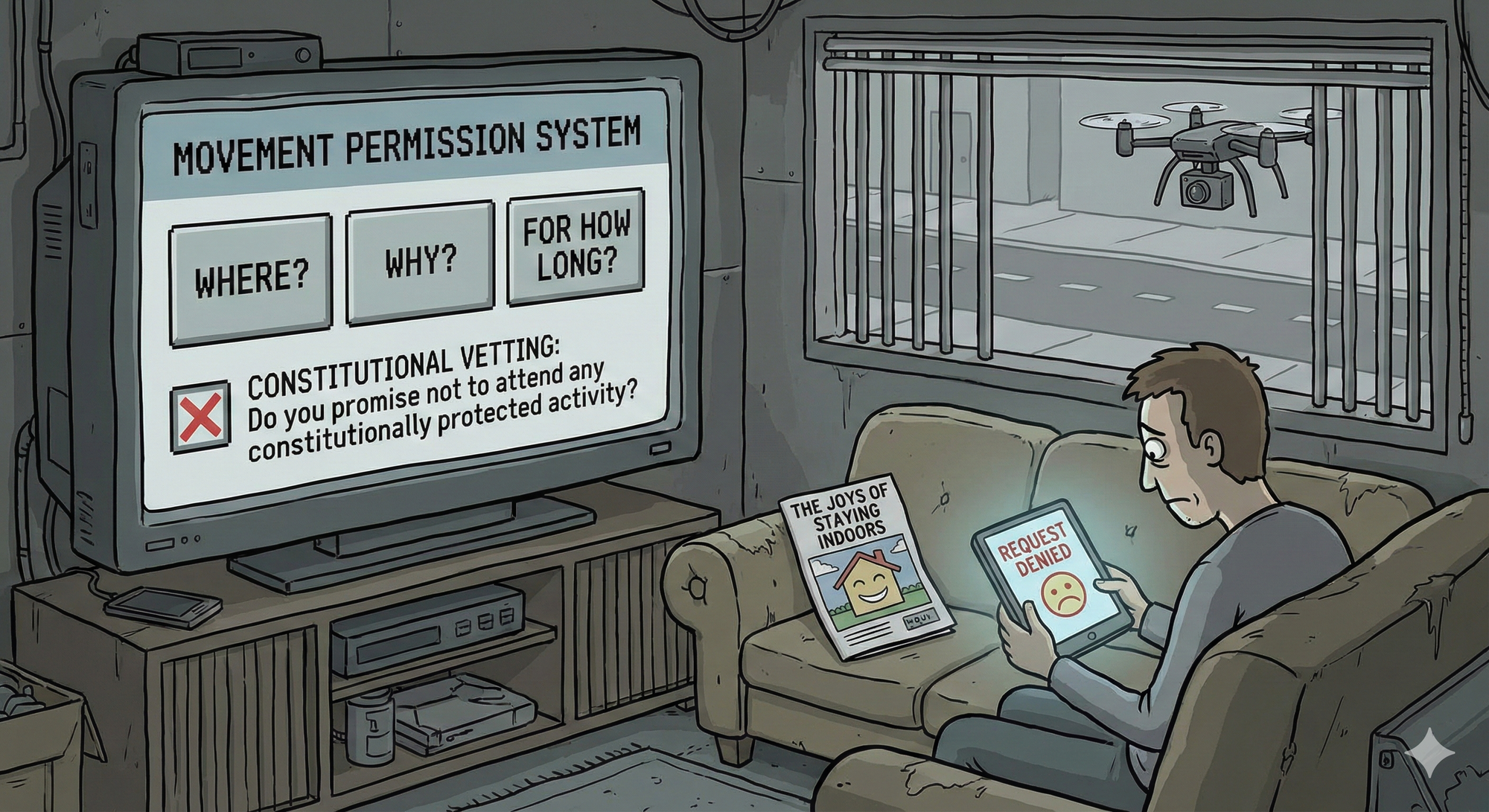
Spontaneous travel is a security risk.
- Authorization Requests: Residents must use an app to ask "Where?", "Why?", and "For how long?" before leaving their driveway.
- Constitutional Vetting: A mandatory checkbox: "Do you promise not to attend any constitutionally protected activity (protests, religious gatherings, etc.)?"
- Denied Requests: Those who are denied receive a helpful pamphlet on the joys of staying indoors.
4. GPS Ankle Monitors for All Citizens
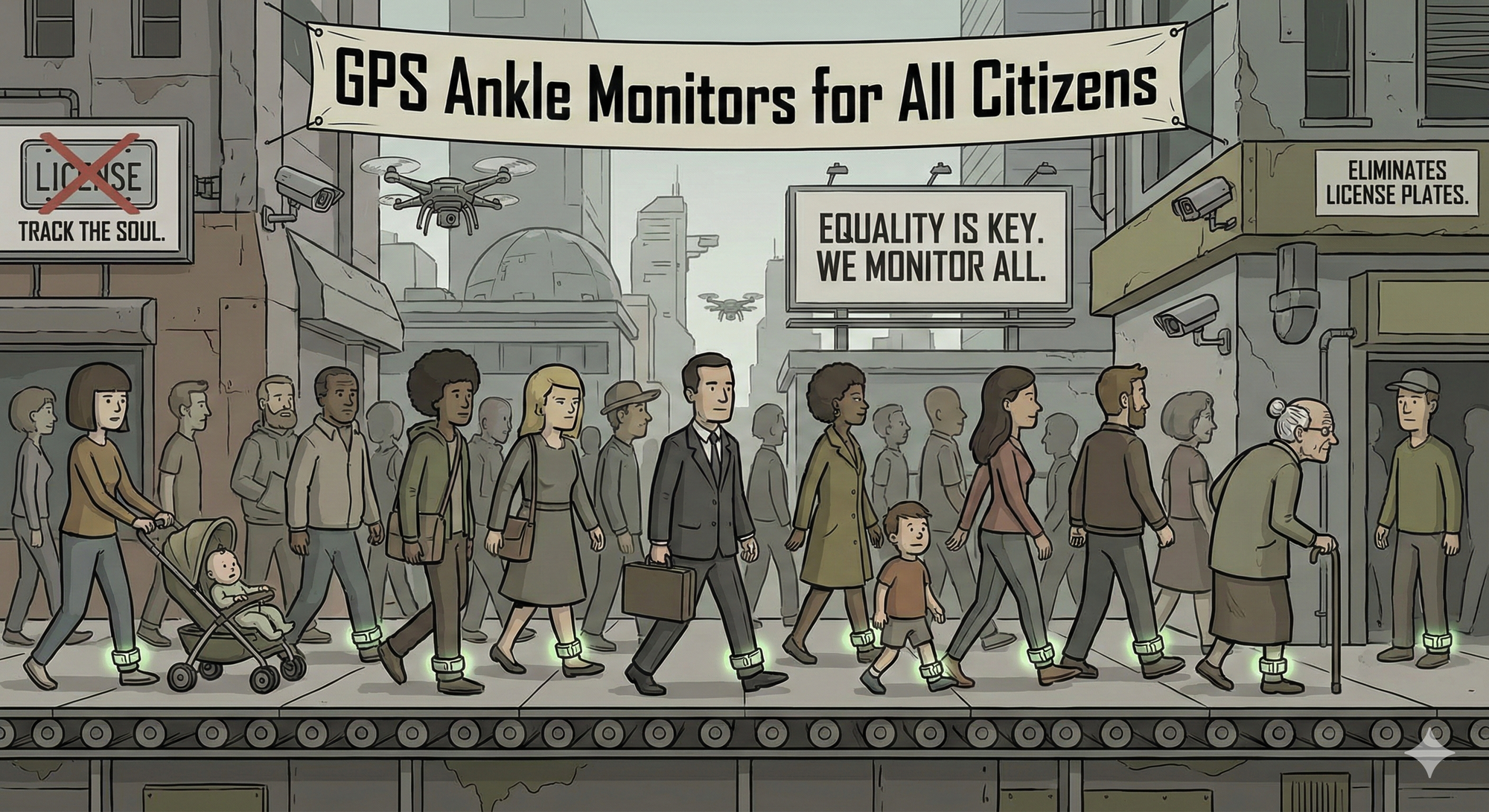
Equality is key. If we monitor some, we must monitor all.
- Universal Implementation: No discrimination, from CEOs to toddlers, everyone gets a sleek, tamper-proof monitor.
- Efficiency: Eliminates the need for license plates entirely. Why track the car when you can track the soul?
5. QR Codes for Citizens
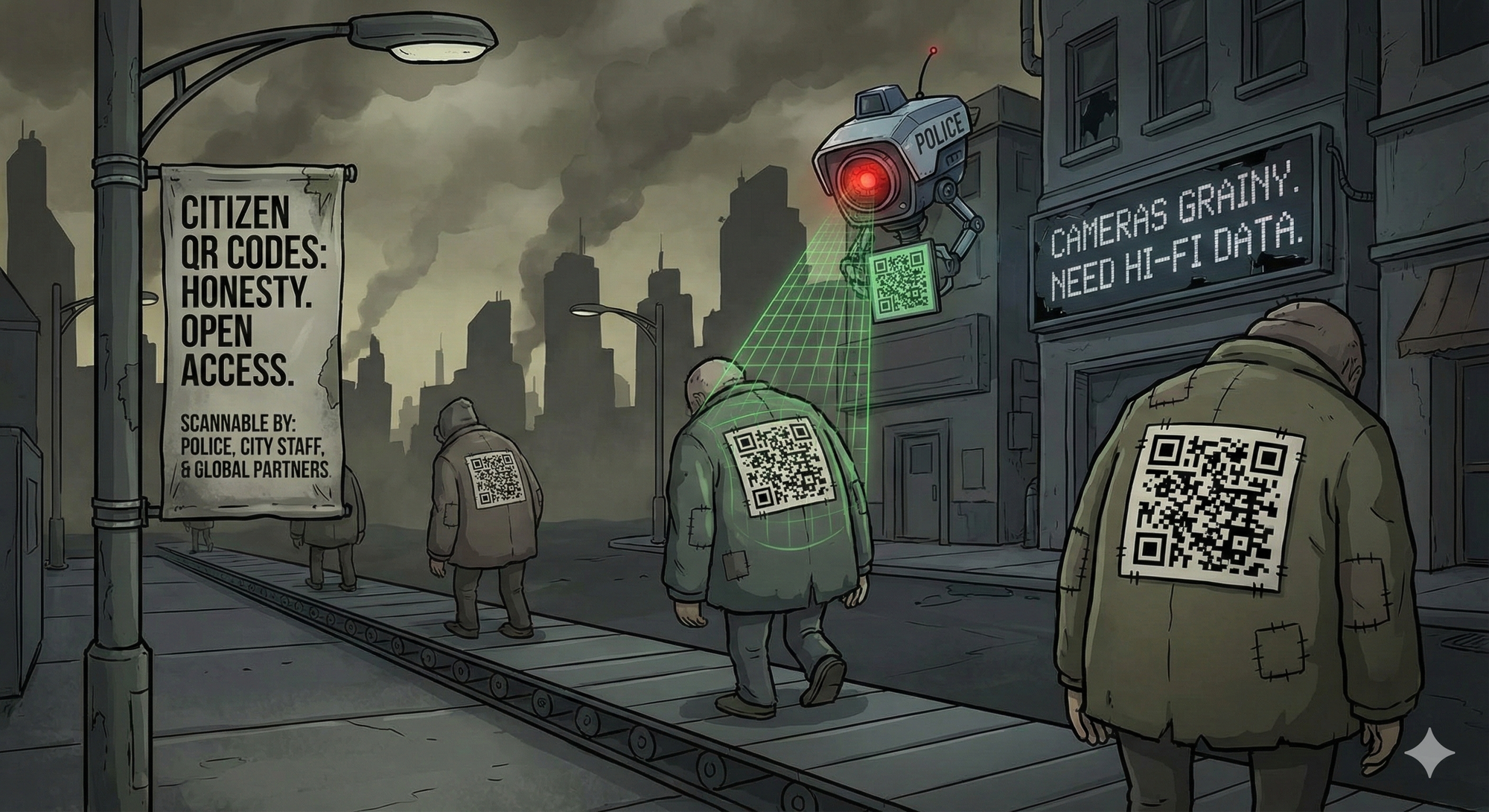
Cameras can be grainy. We need high-fidelity data.
- Visible QR Codes: Every resident must wear a high-contrast QR code on their outermost garment.
- Open Access: Scannable by police, city staff, and in the spirit of the global economy, possibly foreign governments.
- Honesty: Finally, we can stop pretending this is "just about criminals."
6. Predictive Loyalty Index
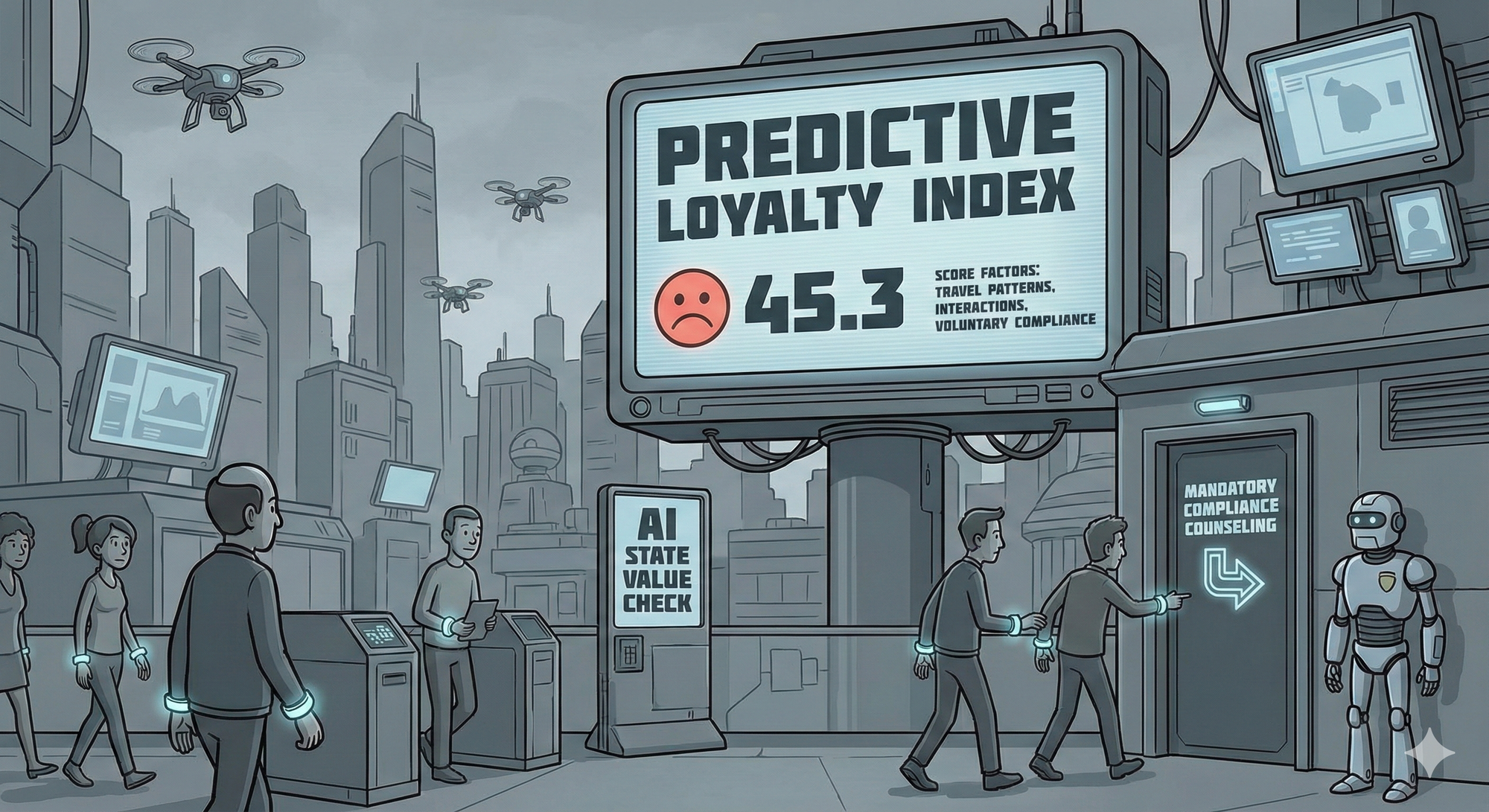
Using AI to determine your value to the State. Your score is calculated based on:
- Travel Patterns: Where you drive and who you visit.
- Interactions: Attendance at "unauthorized" meetings, gun stores, or protest sites.
- Voluntary Compliance: Low scores trigger mandatory "compliance counseling" to help you find your way back to the fold.
7. Visible Citizen Classification Badges
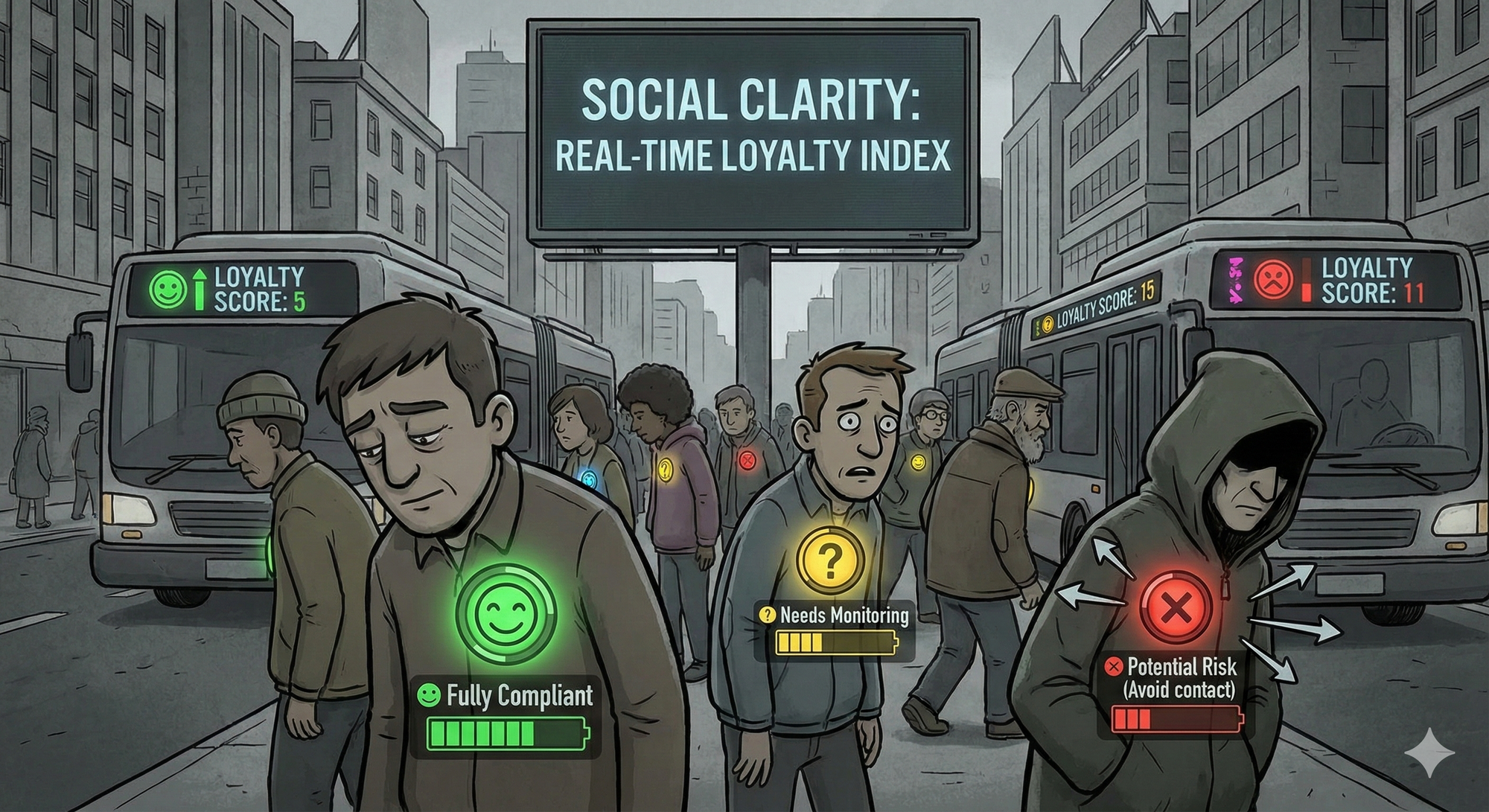
Replace license plate readers with social clarity. Badges are updated in real-time based on your Loyalty Index.
- 🟢 Green: Fully Compliant.
- 🟡 Yellow: Needs Monitoring.
- 🔴 Red: "Potential Risk" (Avoid contact).
Let me know if you have any better ideas for how to boost Greene County's Safety Meter!
And as always, Big Brother is Watching You.